How Much Pea Gravel Do I Need for a Patio?
Measure the patio, choose a practical gravel depth and convert the result into cubic yards, tons or bags before ordering.
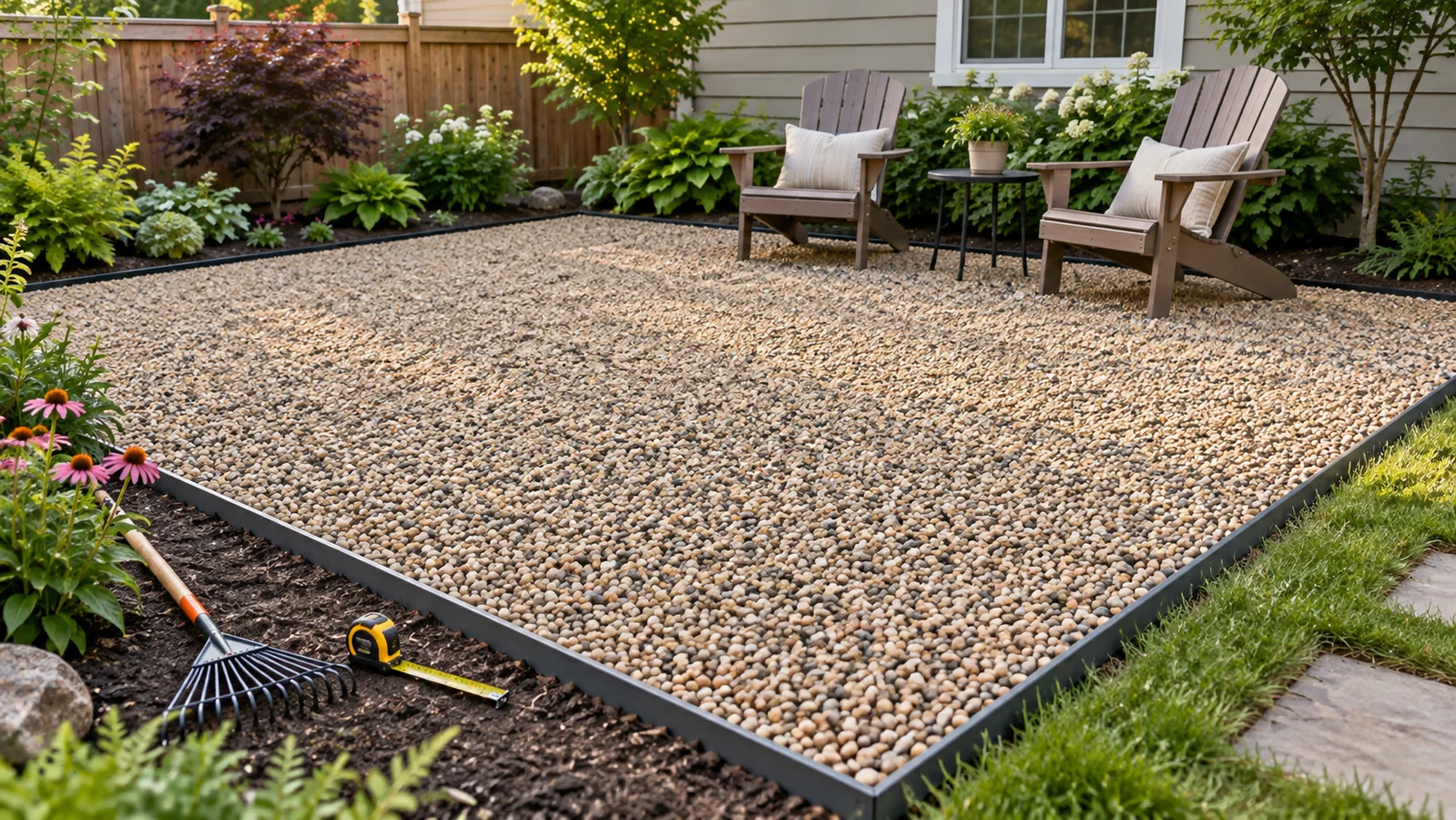
A 12 × 12 ft patio covered with 3 inches of pea gravel needs about 1.33 cubic yards, or roughly 1.87 tons. That equals about 75 bags at 50 lb each, so bulk delivery is usually the practical choice.
Pea gravel patio coverage chart
These estimates use a 3-inch finished depth and average pea-gravel density. Supplier weights vary with stone size and moisture.
| Patio size | Cubic yards | Approx. tons | 50 lb bags |
|---|---|---|---|
| 8 × 10 ft | 0.74 yd³ | 1.04 tons | 42 |
| 10 × 10 ft | 0.93 yd³ | 1.30 tons | 52 |
| 12 × 12 ft | 1.33 yd³ | 1.87 tons | 75 |
| 12 × 16 ft | 1.78 yd³ | 2.49 tons | 100 |
Add 5–10% when the subgrade is uneven or the gravel will settle into the base. Confirm the supplier's ton-per-yard figure before placing a bulk order.
The pea gravel formula
Convert the depth from inches to feet before calculating volume. Three inches equals 0.25 ft.
Cubic feet = length (ft) × width (ft) × depth (in) ÷ 12
Cubic yards = cubic feet ÷ 27
Tons ≈ cubic yards × 1.4
For a 12 × 12 ft patio at 3 inches: 12 × 12 × 3 ÷ 12 = 36 cu ft. Divide by 27 to get 1.33 yd³, then multiply by 1.4 to estimate 1.87 tons.
Step 1: Measure the finished patio
- Measure the longest length and width inside the edging.
- Split L-shaped spaces into rectangles and add their areas.
- For a circle, multiply radius × radius × 3.14.
- Do not include planting beds, stepping stones or permanent fire-pit footprints.
Step 2: Choose the right gravel depth
About 2 inches works for a light decorative top-up over a stable existing layer. A new pedestrian patio commonly uses 3 inches of pea gravel over a compacted crushed-stone base. Deeper loose gravel is harder to walk through and allows furniture legs to sink.
- 2 inches: decorative refresh over an existing stable surface.
- 3 inches: common finished depth for patios and paths.
- 4 inches: useful where minor settlement is expected, but requires firm containment.
Build a stable base before adding pea gravel
Pea gravel is rounded, so it does not lock together like angular crushed stone. Excavate organic soil, compact the subgrade and install a compacted crushed-stone base where stability matters. Separate soil from aggregate with appropriate geotextile, then install rigid edging before placing the finish gravel.
Slope the prepared base away from the house. Pea gravel drains readily, but the water still needs a safe route through or beyond the subgrade.
Bulk gravel or 50 lb bags?
Bags are convenient for small borders and repairs. A full patio quickly reaches dozens of bags: the 12 × 12 example needs about 75. Bulk stone normally reduces packaging, lifting and unit cost, although delivery minimums and access can change the decision.
Use the mulch and gravel calculator to change material, dimensions and depth. You can also open the ready-made 12 × 12 pea gravel patio estimate or the 10 × 10 fire-pit area estimate.
Common estimating mistakes
Entering inches as feet
Three inches is 0.25 ft, not 3 ft. Convert before multiplying or use a calculator that accepts depth in inches.
Skipping the compacted base
The finish-gravel quantity does not include crushed-stone base. Calculate and order the two layers separately.
Ordering exact theoretical volume
Small grade variations, compaction and spillage can leave the finished surface low. A modest buffer avoids a second delivery.
Frequently asked questions
How deep should pea gravel be for a patio?
Three inches is a practical finished depth for most pedestrian patios when installed over a stable, compacted base with edging.
How much does one cubic yard of pea gravel weigh?
A common planning estimate is about 1.4 tons, or 2,800 lb. Actual weight varies by moisture, gradation and local material.
How many square feet does one yard cover?
One cubic yard covers about 108 sq ft at 3 inches deep, 162 sq ft at 2 inches or 81 sq ft at 4 inches.
Can pea gravel go directly over soil?
It can, but the surface is more likely to rut, mix with soil and grow weeds. A prepared base, separation fabric where appropriate and firm edging produce a longer-lasting patio.